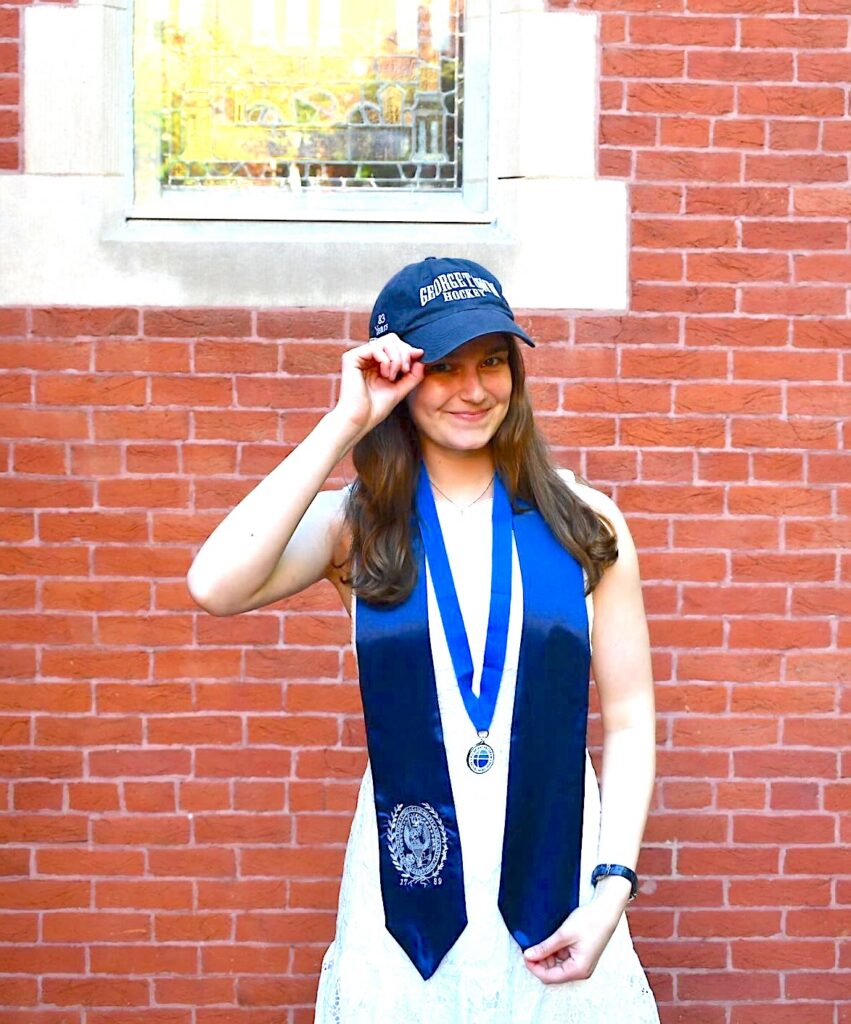

Everyone’s hockey journey is unique. In this NGHL News post, alum Addy Basile (Ironbound Elite ‘2022) shares her hockey experience from middle school through to college grad.
My hockey journey did not start in the traditional way. I was not one of those kids who learned to skate before they walked or whose onesies made them a fan of a particular NHL team. In fact, no one in my family had ever played hockey before. It was my eight-year-old obsession with roller skating birthday parties that led me to sign up for skating lessons and ultimately for roller hockey in my town’s local league, the Middletown Youth Athletic Association. After about a week of getting pummeled around by boys who were already well-seasoned in ice and roller hockey, I somehow decided I wanted to play goalie (and I never looked back). After a year or two of roller hockey, I started “Learn to Play” lessons at the Middletown Ice Arena. Soon after I started playing in their house league, I once again almost immediately opted to play goalie.
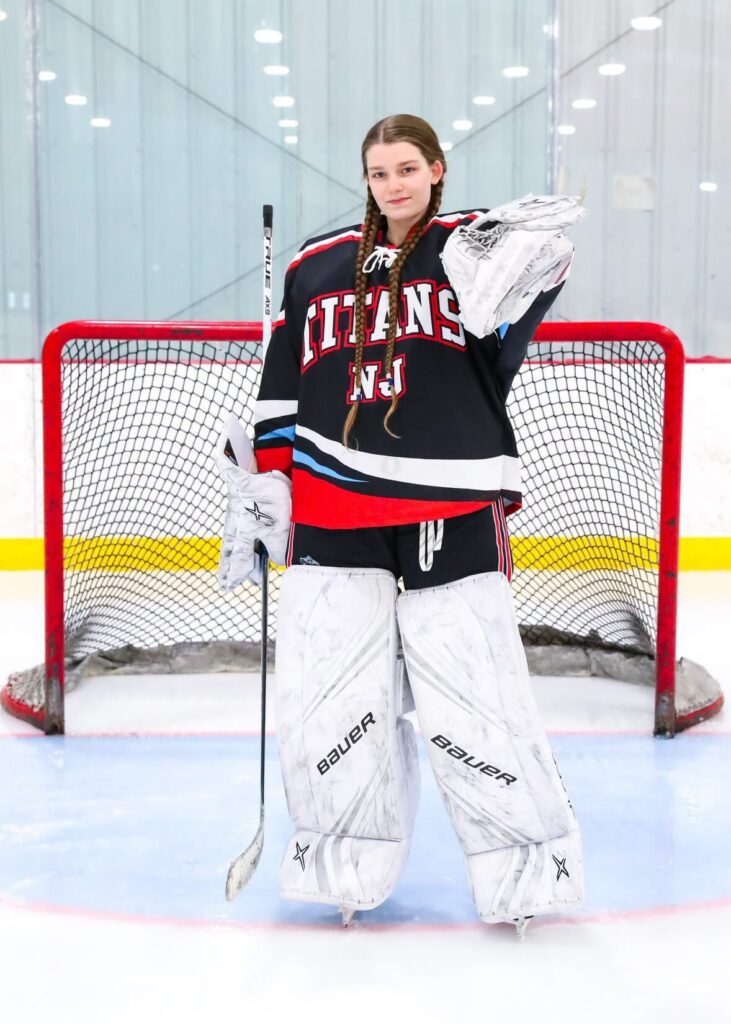
My mom swore she would never let me sign up for travel hockey: too much driving, too much time, too much money. But by 2016, when I was twelve years old, I somehow convinced her to let me try out for the New Jersey Titans. I had glorified the Titans for so long, and I remember wanting so badly to don the red warm-up sweatsuit that all the real travel players had. And what glory it was to be one of those players, of course, on the renowned “Peewee B” team. Still lagging behind all the kids that started playing hockey at birth, I struggled my way through multiple seasons of lower-level hockey on all-boys teams with a range of levels of welcoming-ness to a female goalie. I had a really transformative coach at the Titans that taught me the value of hard work, consistency, and good communication. He never treated me differently from any of the boys (whom he treated very strictly), and I remember distinctly that in the first few days of my travel career, no doubt after being mercied by another local team, he looked me in the eyes and told me that one day I would play college hockey.
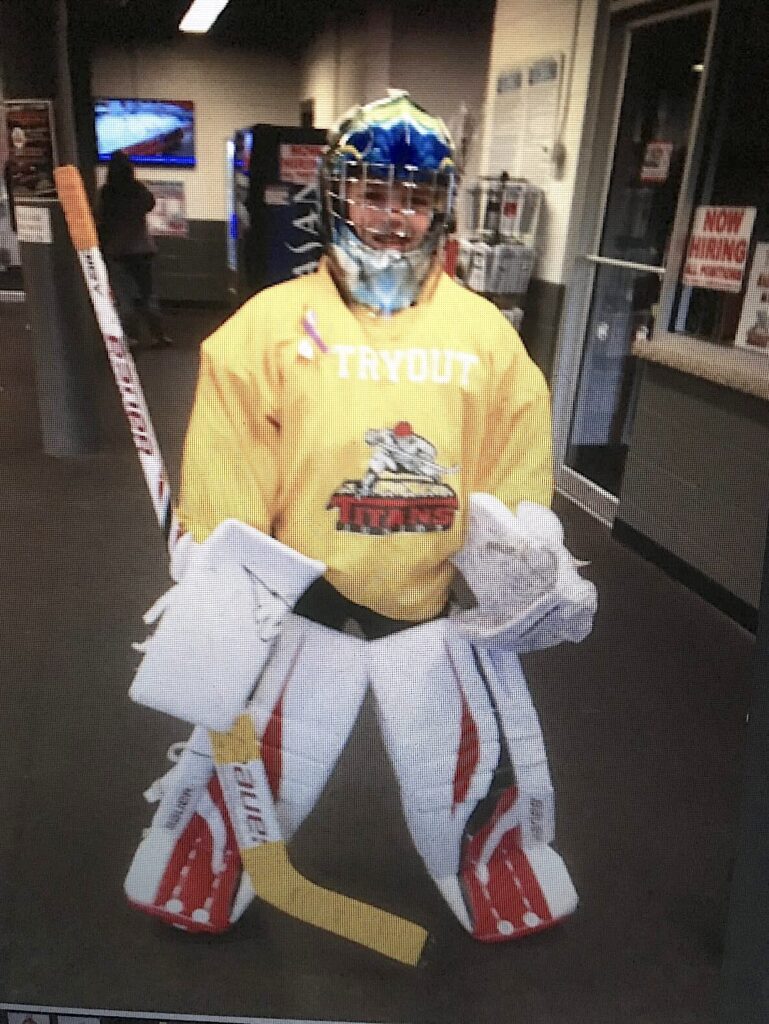

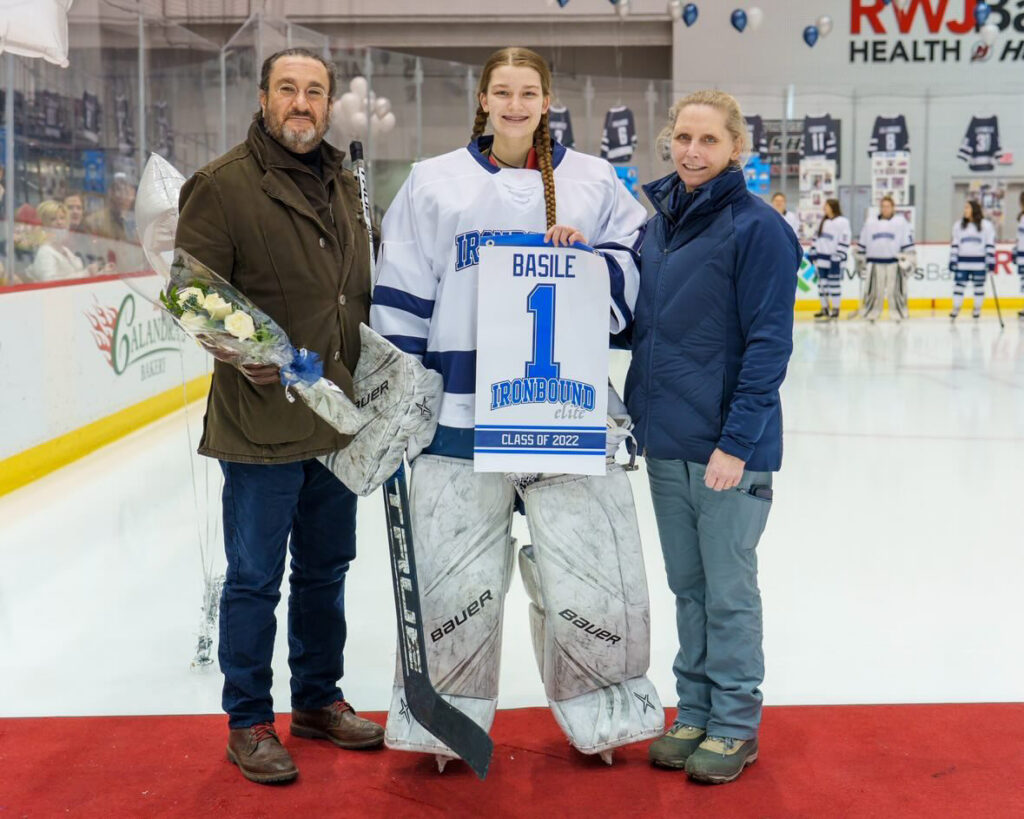
During those years, I became thoroughly obsessed with hockey. Any time I didn’t spend at the rink, I spent skating in my driveway, shooting pucks in my basement, or religiously following the New York Rangers. Somewhere in that obsession with getting better, I started to become a reasonably capable goalie. I continued moving my way up at the Titans through high school, but as time went on, I was hearing more and more voices tell me I would never play college hockey if I didn’t move to an all-girls team. Still hesitant to make the switch and carrying a fair bit of bias about the competition I’d face in an all-girls league, I knew it was true; no coach was going to see me if I stayed where I was. My childhood best friend had recently made the switch to playing girls’ hockey for Ironbound Elite, a totally new, all-girls organization run out of Prudential Center in Newark, New Jersey. When she told me they were seeking a 2004 goalie, my mom drove me up to Codey Arena to have a one-on-one tryout, just me, trying to prove that I’d be worth a college coach’s look in two years’ time.
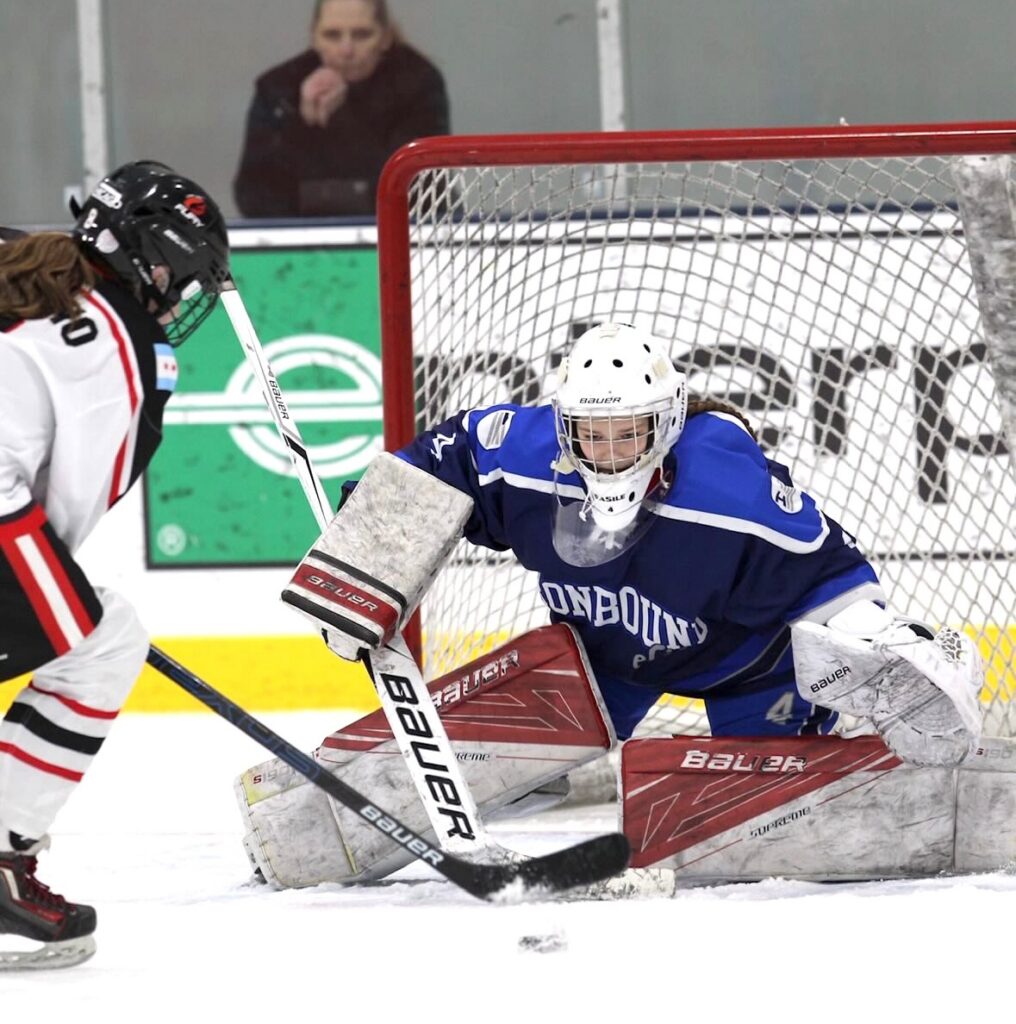
I ended up making it, and so I spent my sophomore and junior years double-rostered with Ironbound Hockey and the Titans. An incredibly chaotic choice made more complicated by the COVID-19 pandemic. The progress I had made in recruiting was nullified by cancelled showcases, college players taking years of extra eligibility, and a huge shared cloud of uncertainty that loomed above us all. It was towards the end of the pandemic, in my junior and senior years, that I felt I was truly hitting my stride in hockey. Travelling from Colorado to Florida to Minnesota virtually every weekend with the 19U Tier 1 squad, I felt like I was finally becoming worthy of a college offer. I had poured so much into hockey for so many years, and all I wanted was the validation that it was all for something. A commitment, a signing day, and a bright lettered sweatshirt.
At the same time, I started to recognize other parts of myself that I had given up for hockey. I loved school so much. I poured myself into my courses, student council, sports, theatre, and music. But I was always sort of on the outskirts, never able to fully commit to extracurriculars, knowing that my nights, weekends, and extra brain space was all reserved for hockey. I also loved to work. I had a job at an arts and crafts store where I’d go for 3 or 4 hours between when the final school bell rang and when I had to be in the car on the way to Newark. I always wished I could stay later and help close the store, but hockey loomed. I started to realize that hockey had taken over my life. If I were to get recruited, I would allow it to do the same to my college experience.
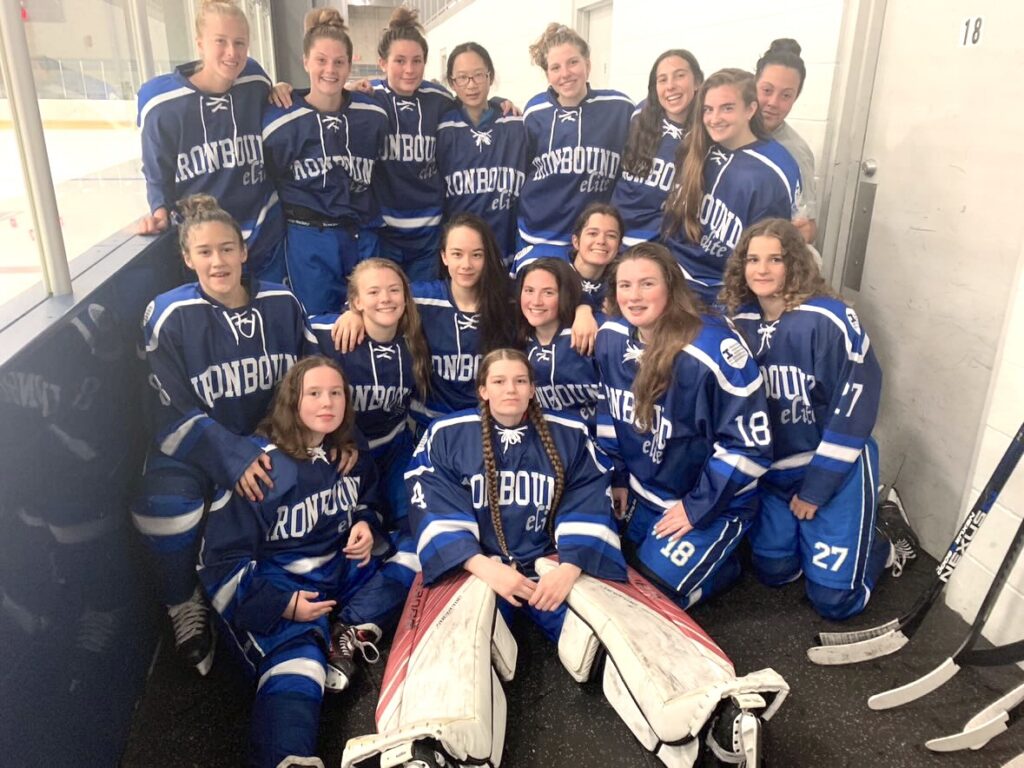
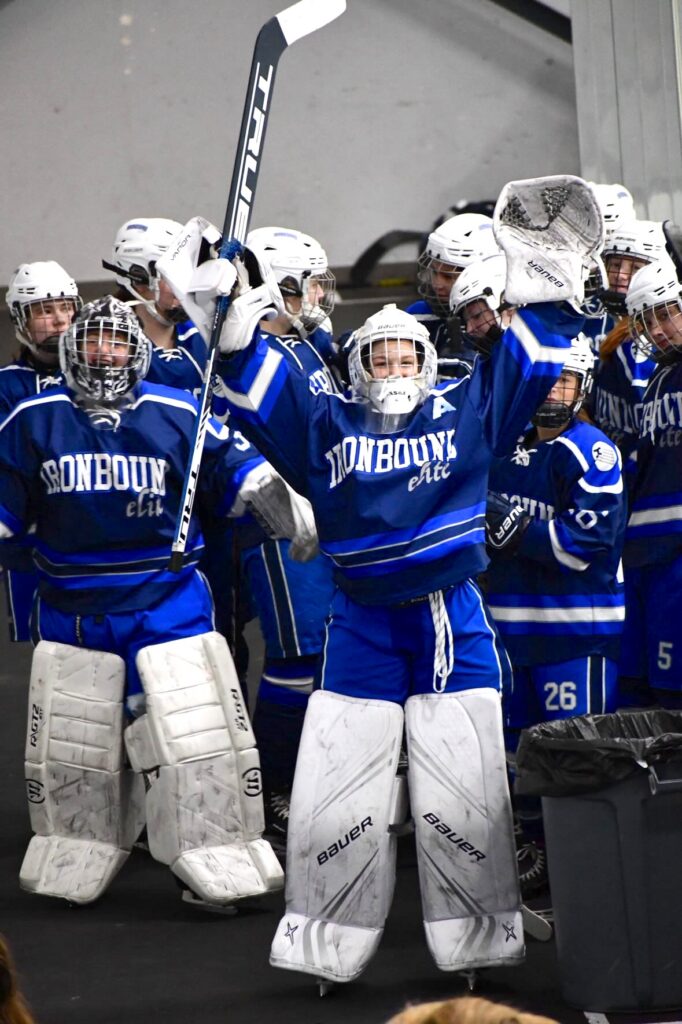
There was something very comforting, still, about having everything set up. A team, a built-in group of friends, a plan. But I knew that being true to myself would mean allowing myself the space, time, and opportunity to explore and engage in all the activities I always loved doing. It would mean not sacrificing everything for hockey.
So, in my senior year, among college applications and last-minute recruiting, I decided I didn’t really want to play NCAA hockey. I wanted to go to a school where I could do and be everything I wanted to. I wanted to learn, work, create, and build relationships without the constraints of being a full-time athlete. It was around this time that I was accepted to Georgetown University, and I decided to go. In all honesty, I thought my hockey career was finished in February of 2022. Not playing hockey was not what those around me had wanted for me, and it certainly felt like the wrong decision while everyone else was boasting their NCAA commitments.
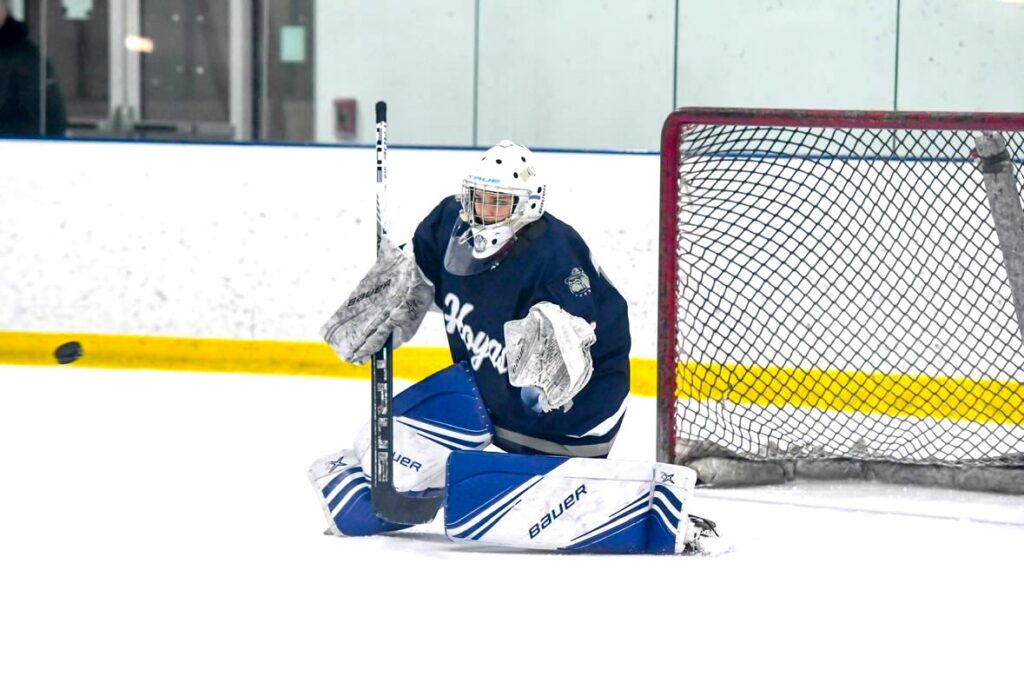
But in reality, I was not finished playing hockey. In the summer of 2022, my old goalie coach sent me the contact for one of the founding members of Georgetown Women’s Hockey, who would soon become a close friend of mine. I joined the team upon my arrival in Washington, DC, and I never looked back. My freshman year was the team’s first season officially in the ACHA, and we ended up winning our regional championship. The team was my first community on campus and a place where I felt valued for who I was and not just how many saves I made. I heard from so many others the same story as I was experiencing myself: “playing club hockey reminded me why I loved this sport in the first place.” Free from the pressures of recruitment and the pain of nonstop training, I was finally able to focus on what hockey really meant to me: friendship, camaraderie, and fun. Somehow, there could exist a balance between fierce competition and genuine enjoyment, all while wearing my school’s name across my chest.
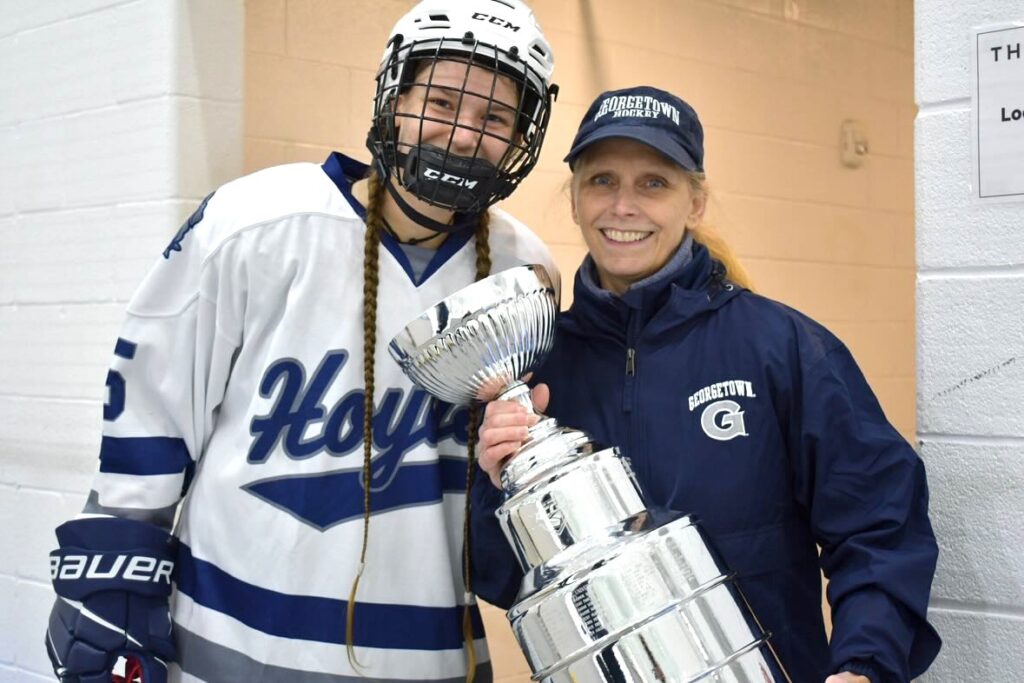

At the end of my freshman year, with the founding members all graduating, I found myself becoming president of the program, a role I would fill for the rest of my time at Georgetown. While it was extremely overwhelming at times, learning to navigate the operations, finances, travel, media, university, and alumni relations of the team made me truly appreciate everything that goes on behind the scenes of a successful team. It also allowed me to get to know deeply how an organization like an ACHA team provides the foundation for incredibly meaningful growth and relationships over a player’s four years. Georgetown Hockey brought me some of my best friends and the most memorable experiences of my college years. It also introduced me to the most wonderful network of alumni and coaches who have shaped the person I became at Georgetown. In the meantime, though, I got to do and be everything I desired in college. I had three jobs I loved, did a double major, learned a language that changed my life, mentored younger students, played other sports, and got to share my love for hockey with a brand new group of people
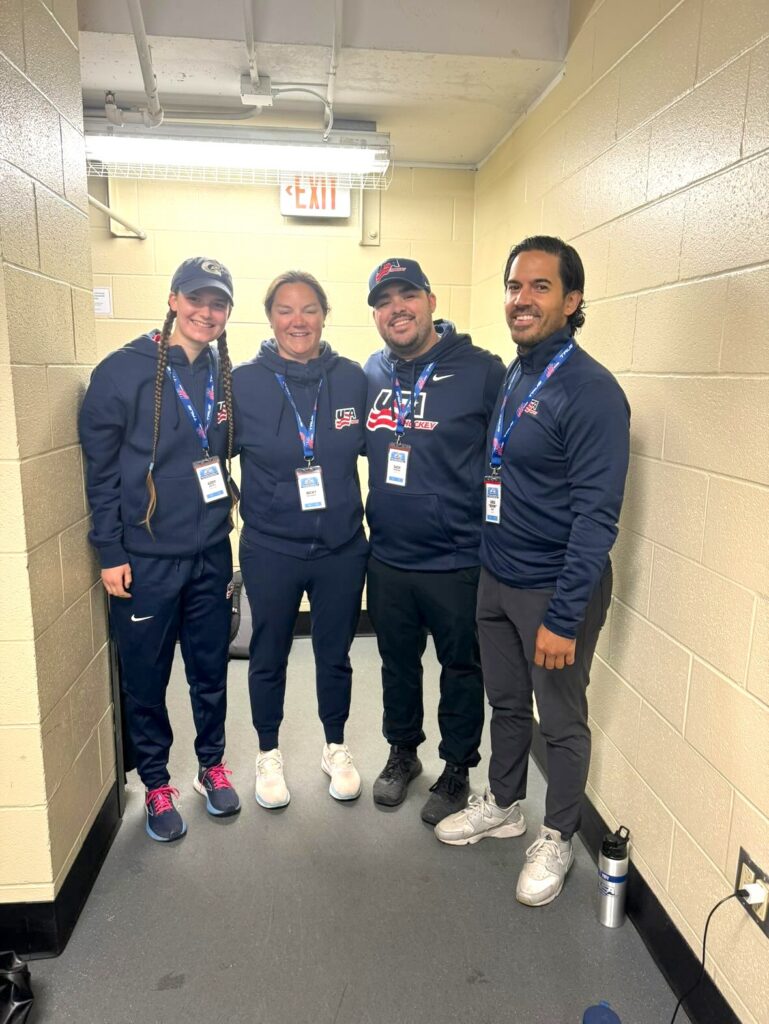
Through this work, I even got the opportunity to work at the USA Hockey National Camp. There, I met people from all over the hockey world who taught me that every person has a role in the hockey community. Just because you don’t play Division I hockey doesn’t mean that the sport means less to you or that you contribute less to the sport itself. Instead, hockey at all levels brings people together, and what I have learned is that you can pretty much create that community wherever you go.
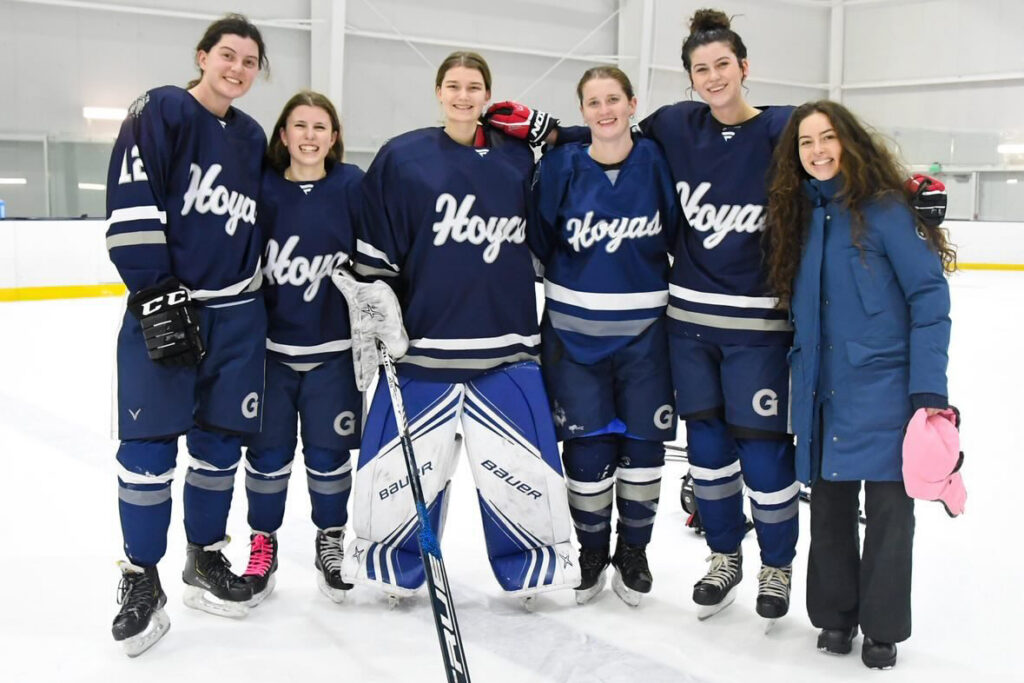
I ended up even drawing on my hockey experiences when writing my application for a Fulbright scholarship this past fall. Now, as I graduate and prepare to teach English in Southern Italy, a place not exactly known for its ice rinks, I have had to reflect on what a year without hockey will look like. But then I think back to 2022, when I truly believed I had retired, and realize that hockey isn’t something that ever really leaves you. It shapes you, it builds you up, and it finds you wherever you go.